The Sponsorship Gap: Why So Many VALORANT Teams Are Going It Alone


Recommended casinos
Most people watching VALORANT esports assume the teams on screen are backed by brands, investors, or organizations with deep pockets. The reality is far less glamorous. The majority of teams competing in VALORANT's open and amateur circuits are entirely unsponsored — running on entry fees, player contributions, and sheer passion. This isn't an accident. It's the result of structural, financial, and strategic forces that make VALORANT a uniquely difficult space for sponsorship to take root at scale.
Key Takeaways
- The majority of VALORANT teams below the VCT partnership tier operate without any formal sponsorship
- Riot's tightly controlled ecosystem limits organic brand entry points compared to other titles
- Sponsors struggle to justify ROI without reliable viewership data or audience guarantees at lower tiers
- Player turnover and roster instability make long-term brand deals risky for potential sponsors
- Small org budgets mean teams can't afford the staff or infrastructure needed to attract and retain sponsors
- The path from open circuit to franchised league is narrow, reducing incentive for brands to invest early
- Community-funded models and creator partnerships are emerging as alternative revenue sources
The Landscape: What "Unsponsored" Actually Means in VALORANT
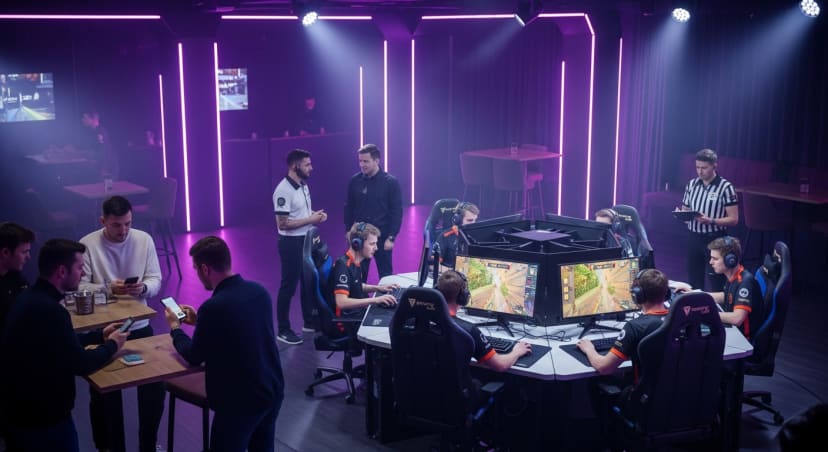
Being unsponsored in VALORANT doesn't just mean no logo on a jersey. It means no travel budget, no bootcamp support, no media team, and often no salary. Players on these teams frequently self-fund tournament entry fees, buy their own peripherals, and coordinate everything through Discord servers and group chats.
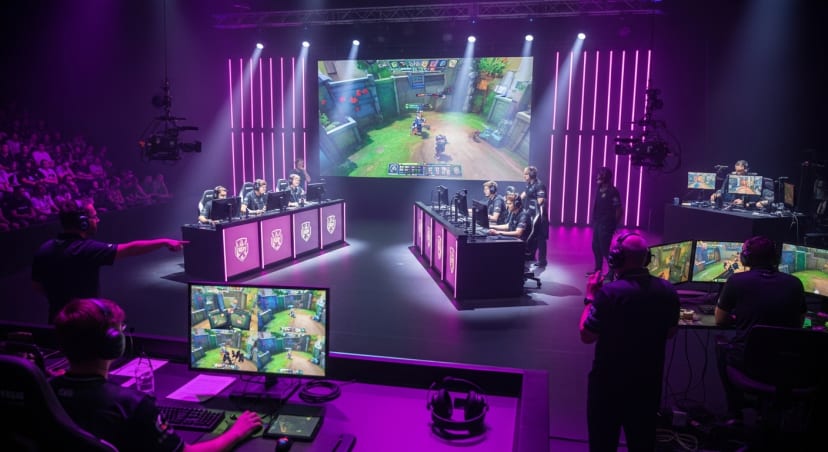
This is the lived reality for thousands of teams competing in VALORANT's open circuits, NSG tournaments, and regional qualifiers. While the VCT partnered leagues — AMERICAS, EMEA, and Pacific — project a polished, well-funded image, they represent a tiny fraction of the overall competitive ecosystem. Below that tier, sponsorship is the exception, not the rule.
Why Sponsors Aren't Rushing In
The ROI Problem
Esports sponsorships live and die by exposure metrics: stream viewership, social impressions, and clip virality. At the tier-2 and below level in VALORANT, those numbers are difficult to guarantee. A team playing in an open qualifier might stream to a few hundred concurrent viewers on a good day. For most brands, that simply doesn't justify even a modest deal.
Unlike traditional sports, where even minor league teams play in physical venues with local community presence, unsponsored VALORANT teams exist almost entirely online. There's no local game-day foot traffic, no stadium signage, no regional TV slot. The value proposition for a brand is harder to articulate and harder to measure.
Riot's Ecosystem Control
Riot Games has built one of the most tightly structured ecosystems in competitive gaming. The VCT franchising model was designed to create stability and prestige — and it has, at the top level. But a side effect is that it creates a very clear "haves and have-nots" dynamic. Brands paying attention to esports understand that the real VCT spotlight sits with the 30 or so partnered orgs globally. Everything below that feels like a waiting room with no guaranteed exit.
This contrasts with games like CS2 and League of Legends, whose third-party circuits have historically offered more diverse sponsorship entry points. In VALORANT, Riot's grip on the competitive structure — while beneficial for quality — compresses the commercial opportunity for lower-tier teams.
Roster Instability
A sponsor betting on a VALORANT team at the open circuit level is betting on a lineup that may look completely different in three months. Player poaching, burnout, visa issues for international rosters, and the constant churn of tryouts make it genuinely risky for a brand to attach its name to a team. There's no guarantee the faces a sponsor signed up to represent them will still be on the roster when the campaign goes live.
This isn't unique to VALORANT, but it's especially pronounced because the game's competitive scene is still relatively young. Loyalty structures, long-term contracts, and the kind of player-org relationships that stabilize rosters in more mature esports titles haven't fully developed at the grassroots level.
Small Orgs Can't Close the Deal
Attracting sponsorship requires infrastructure: a business development contact, a media kit, post-event reporting, and deliverable tracking. Most unsponsored VALORANT teams are run by a team captain who is also the IGL, the social media manager, and a full-time student or worker. There is no one to write the pitch deck, follow up on emails, or produce the recap content a sponsor expects after a campaign.
This creates a chicken-and-egg problem. Teams need sponsorship to hire the people who could secure it. Without that first deal, the cycle doesn't start.
The Narrow Path to the Top
One of the most significant structural issues is how few teams ever make it from the open circuit to a partnered league. Riot's franchising model means there is no traditional promotion/relegation system — spots in the top leagues are held by invited partner organizations rather than earned through competitive results alone. For a brand considering a long-term bet on a grassroots team, the ceiling is genuinely unclear.
In traditional sports, sponsoring a lower-league team carries the romantic possibility that you were there first. In VALORANT's current structure, that narrative is harder to construct. The team you sponsor today might never make it to VCT, and the path through Challengers and Ascension — while real — is narrow and brutally competitive.
What Teams Are Doing Instead
Faced with a sponsorship desert, creative teams have found other ways to survive and grow.
- Community and fan funding have become a lifeline for some. Platforms like Patreon and direct Twitch subscriptions let dedicated fans directly support teams they believe in. It's not scalable, but it keeps the lights on.
- Creator-adjacent partnerships are increasingly common. Teams with streamers or content creators on their roster can leverage those individuals' brand deals to benefit the org indirectly—even if the org itself isn't the named partner.
- Peripheral and gaming chair micro-deals — the stereotypical "first sponsorship" — remain the most accessible entry point. While not lucrative, affiliate codes and product exchanges give teams something to point to when pitching larger partners later.
- Coaching and academy revenue is an emerging model in which established amateur teams monetize their competitive knowledge by offering VOD review sessions, scrimmage access, or structured coaching for up-and-coming players.
What Needs to Change
For sponsorship to meaningfully reach lower-tier VALORANT teams, a few things would need to shift. Riot would need to either formalize a broader commercial framework for open competition or make the path to becoming a Challenger more predictable and transparent. Tournament organizers would need to build out media packages that make it easier for brands to evaluate and activate at lower tiers. And teams themselves would benefit from shared resources — templated pitch decks, standard media kit formats, or collective bargaining-style representation through player or org associations.
None of this is impossible. The infrastructure exists in other esports ecosystems. The question is whether VALORANT's rapid growth at the top creates enough gravitational pull to eventually lift conditions for everyone beneath it — or whether the gap between the partnered elite and the unsponsored majority simply continues to widen.
The Bottom Line
The sponsorship silence around most VALORANT teams isn't a mystery — it's a predictable outcome of how the ecosystem was built. Tight structure, limited exposure data, roster volatility, and small-org capacity all combine to create a market where brands don't see enough signal to commit. For players grinding in the open circuit, the passion is real, but the commercial support often isn't. Until the structural incentives shift, most VALORANT teams will keep competing exactly as they have been: without a logo in sight.
Sources: Riot Games, Esports Earnings, Dot Esports, The Esports Observer / Insider Sport, Esports.gg.