When Esports Betting Numbers Stop Holding Up

Recommended casinos
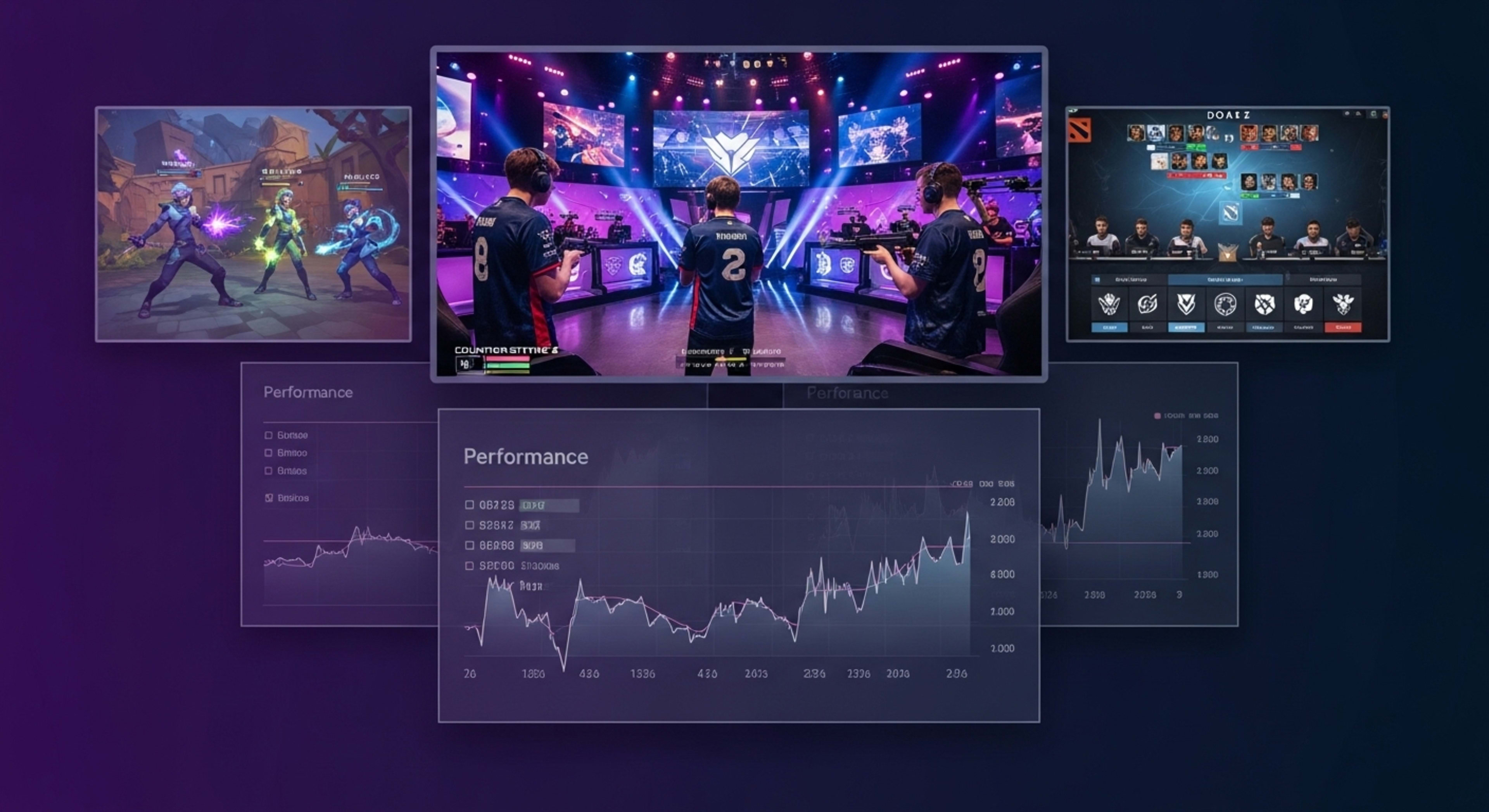
Esports betting markets depend heavily on historical performance data to shape odds and expectations. However, as competitive ecosystems evolve at an accelerated pace, those numbers are increasingly failing to reflect what actually happens in matches.
What once appeared to be a data-rich, model-friendly environment is revealing structural weaknesses. In modern esports, betting data can become less relevant faster than markets can adjust, creating gaps between statistical projections and competitive reality.
Key Takeaways
- Esports betting data degrades faster than traditional sports data
- Game updates regularly undermine historical performance metrics
- Roster movement introduces distortion into player and team statistics
- Match context often outweighs long-term trends
- Data is most reliable when supported by situational analysis
The Rapid Obsolescence of Esports Data
In traditional sports, performance data maintains relevance across seasons. Rules are stable, player roles evolve slowly, and competitive structures rarely shift. Esports operates under fundamentally different conditions.
Frequent balance patches alter core mechanics, shift optimal strategies, and redefine what “strong performance” means. As a result, datasets built even a few weeks earlier may no longer align with the current state of play. Betting markets still reference this data, but its predictive value diminishes quickly.
Roster Changes and Statistical Distortion
Roster stability remains one of the most overlooked variables in esports betting. Player transfers, substitutions, and role changes occur far more frequently than in traditional sports, particularly in Counter-Strike, VALORANT, and Dota 2.
Statistics often reflect performance in previous systems or roles, while team-level metrics assume cohesion that no longer exists. The numbers remain visible, but the context behind them has changed, reducing their reliability.
When Match Context Overrides Data
Esports competition is not uniform in intent. Group-stage matches, seeding games, and low-pressure series often serve strategic purposes rather than competitive ones. Teams may experiment with tactics, conserve strategies, or prioritize preparation over immediate results.
From a data standpoint, these matches are weighted equally. From a competitive standpoint, they are not. This mismatch regularly leads to betting data being misinterpreted.
High-Variance Formats Challenge Predictive Models
Many esports titles are defined by narrow margins. In Counter-Strike and VALORANT, a single round can alter momentum irreversibly. In Dota 2, one draft decision or team fight can determine an entire series.
This level of variance amplifies the impact of execution errors and clutch moments—factors that data struggles to model consistently.
When Betting Data Still Adds Value
Esports betting data remains useful under controlled conditions, particularly when competitive volatility is reduced.
| Condition | Reliability |
|---|---|
| Stable rosters | High |
| Established meta | Moderate to high |
| Consistent tournament formats | Moderate |
| New patches | Low |
| Recent roster changes | Low |
Treating data as situational rather than absolute is increasingly essential.
Closing Perspective
As esports betting continues to mature, data quality will improve—but instability is not going away. Rapid updates, evolving strategies, and fluid team structures are inherent to esports competition.
Understanding when betting data loses trustworthiness is becoming a critical skill. In esports, knowing when to step back from the numbers can be just as valuable as knowing how to read them.