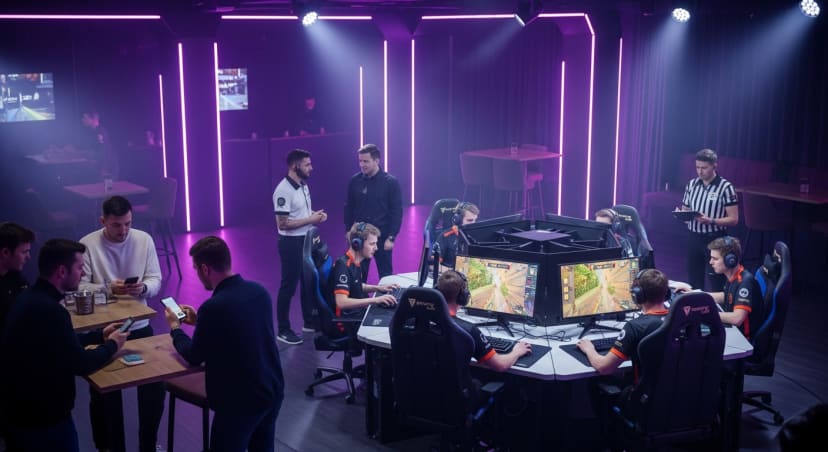
Esports Teams Turn to Teenage Talent as Youth Pipelines Reshape Competition


Recommended casinos
For years, experience was treated as a prerequisite at the top level of esports. Veteran players anchored rosters, guided strategy, and justified premium salaries. That model is now being quietly replaced.
Across elite competition, organizations are increasingly trusting teenage prospects to fill starting roles. What was once considered risky has become a rational response to rising costs, faster game cycles, and the need for long-term roster stability. Youth is no longer a gamble—it is a strategy.
Key Takeaways
- Top esports organizations are accelerating the shift toward early-career signings.
- Youth-first roster strategies offer longer competitive windows and lower financial risk.
- Structured development systems are replacing short-term veteran fixes.
- Regions with established talent pipelines are setting the pace.
- The age profile of Tier-1 esports is trending younger heading into 2026.
Why Teams Are Prioritising Youth Over Experience
In modern competitive environments, raw mechanics and adaptability often outweigh institutional knowledge. In top-level League of Legends competition, elite Counter-Strike play, and high-pressure Valorant matches, reaction speed and learning velocity peak early.
This has pushed organizations to rethink roster construction. Instead of paying premiums for veteran stability, teams are integrating teenage prospects directly into structured systems. Models such as Fnatic’s development system, G2’s academy structure, and Cloud9’s talent pipeline demonstrate how early-career players can be prepared for Tier-1 competition without inflating budgets.
Younger players also arrive without entrenched habits, making them easier to shape within data-driven coaching environments.
The Economic Logic Behind Early-Career Signings
The financial case for youth is difficult to ignore. Veteran contracts are expensive and often short-term, while teenage prospects offer a longer runway and higher upside.
In the North American ecosystem and the European esports market, operating costs have forced teams to adopt more sustainable roster models. Meanwhile, Korea’s talent-first model and China’s development-heavy approach have long normalized early debuts, particularly in League of Legends.
What once looked aggressive now looks disciplined.
How Experience Is Being Repositioned
The rise of teenage talent does not eliminate experience—it reallocates it.
Veterans increasingly serve as in-game anchors, short-term stabilisers, or mentors rather than long-term franchise players. Strategic responsibility has shifted toward coaching staffs, analysts, and performance specialists, reducing reliance on individual leadership.
In this structure-first environment, systems absorb what experience was once provided.
What This Means for Esports in 2026
By 2026, Tier-1 rosters across multiple titles are expected to skew younger. Organizations with strong scouting, academy integration, and academy-to-Tier-1 promotion paths will hold a competitive advantage over teams reliant on veteran-heavy rebuilds.
Youth pipelines are becoming defensive moats.
The next generation of dominant teams will not simply discover talent earlier—they will industrialize development more effectively.