Generational Betting Trends: Esports Betting Growth Fueled by Gen Z & Millennials

Recommended casinos
The online gambling industry is changing quickly, and esports betting is one of the biggest reasons why. What started as a small and often unregulated activity has grown into a major global market. Younger generations, especially those who grew up watching and playing competitive video games, are pushing this growth forward. For them, esports is normal entertainment, not something new. This article looks at how esports betting has expanded so fast and how Gen Z and Millennials are reshaping the betting industry with very different habits and expectations.
Key Takeaways
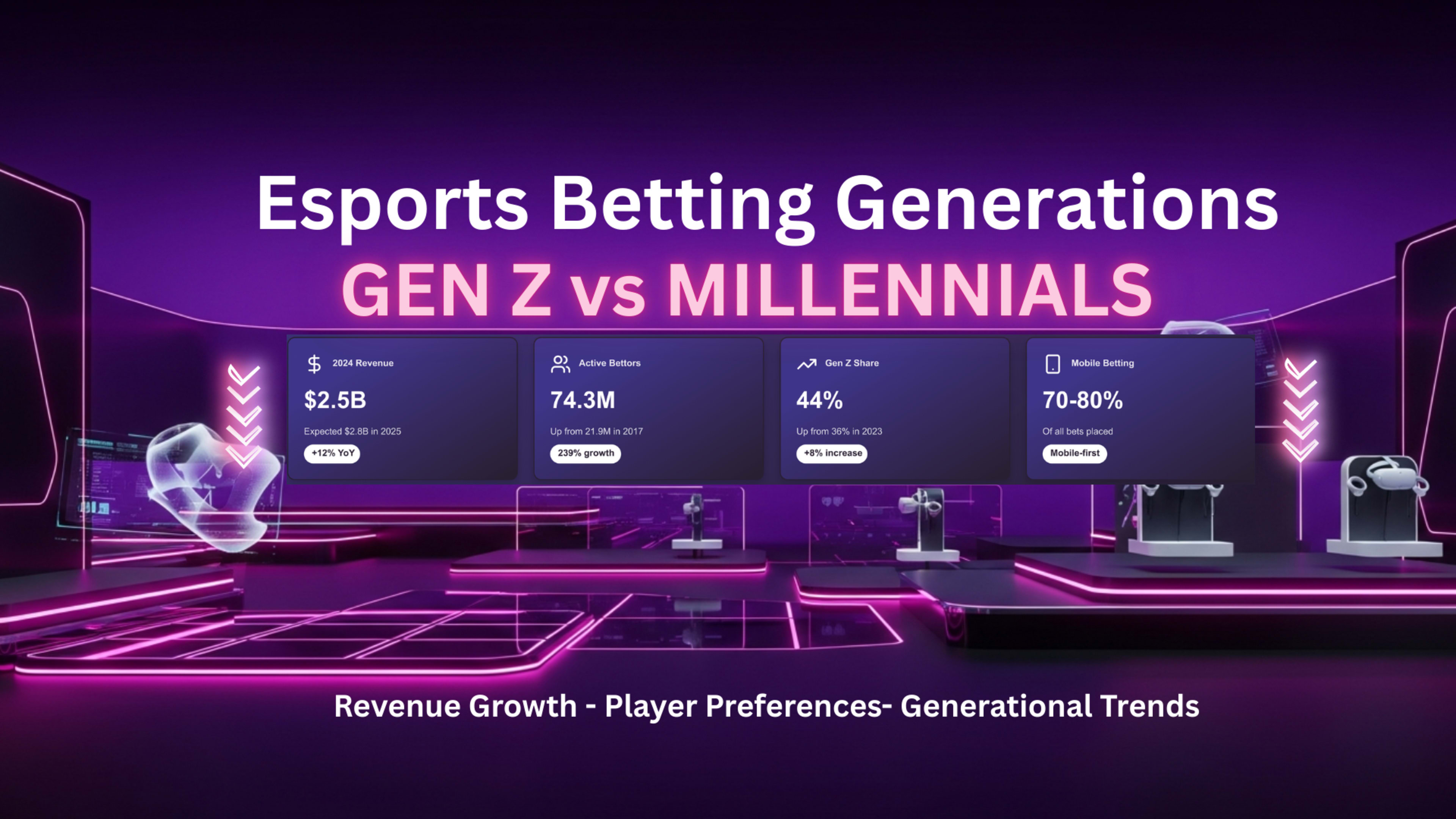
- Explosive Market Growth: Global esports betting revenue reached $2.5 billion in 2024, is expected to grow to $2.8 billion in 2025, and is projected to pass $3 billion by 2026. This reflects roughly 12% year-over-year growth, driven by a user base that expanded from 21.9 million in 2017 to 74.3 million in 2024.
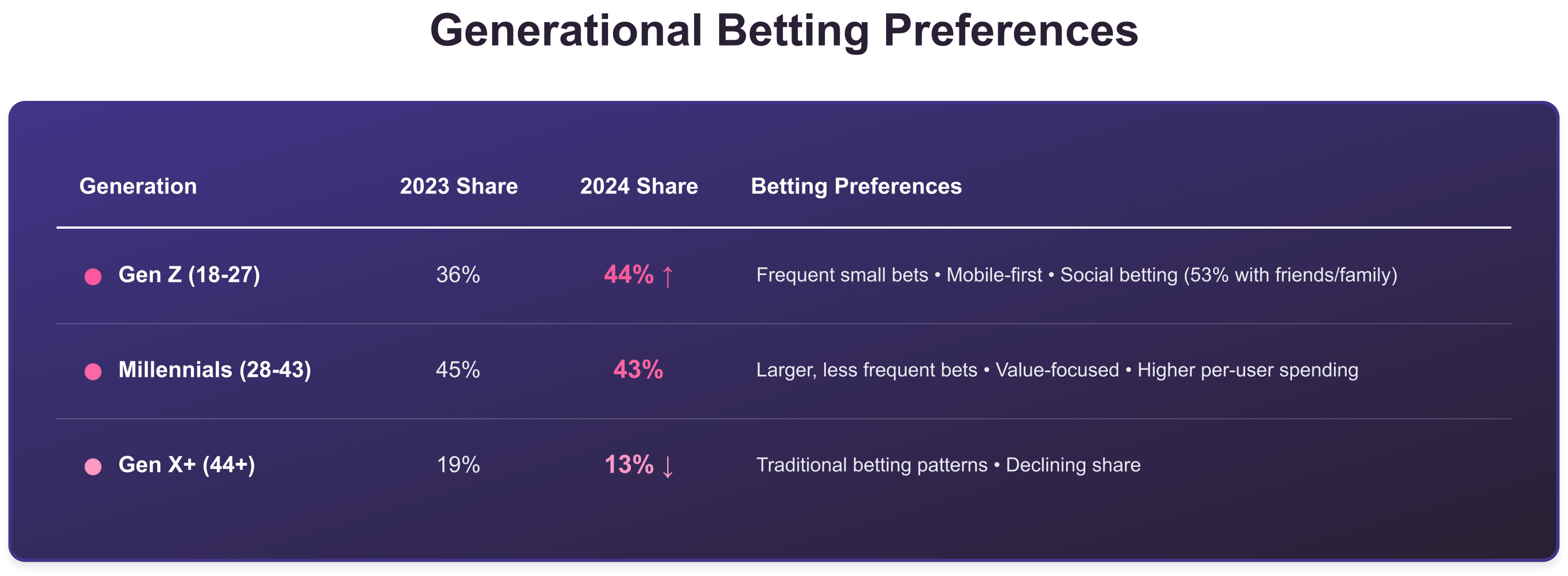
- Gen Z Dominance Emerging: Gen Z bettors (ages 18–27) now represent 44% of the market in 2024, up from 36% in 2023. Millennials (ages 28–43) make up around 43–44%, meaning these two generations together account for nearly 90% of all esports bettors worldwide.
- Contrasting Betting Behaviors: Gen Z prefers mobile-first betting, frequent low-value wagers, and social betting experiences, with 53% betting alongside friends or family. Millennials place fewer bets but wager larger amounts, generating higher revenue per person.
- Mobile and Technology Adoption: Around 70–80% of all esports bets are placed on mobile devices. Gen Z leads in cryptocurrency usage, fintech tools, and responsible gambling features, with about 25% actively using safety tools.
- European Market Leadership: Europe’s under-25 betting segment is growing at more than 8% per year through 2031. The UK alone holds about 25% of Europe’s online gambling revenue, supported by strong regulation and licensed platforms.
Esports Betting Evolution in Time
Esports betting has come a long way in a relatively short time. In its early days, much of the activity happened through skin betting, where in-game cosmetic items were used as currency. These systems operated mostly outside regulation and carried clear risks. Over time, however, the industry shifted toward licensed and regulated esports betting platforms.
The financial growth tells the story clearly. Esports betting generated about $2.5 billion in revenue in 2024 and is expected to reach $2.8 billion in 2025. By 2026, projections suggest the market will exceed $3 billion. This growth is not just about money. The number of people betting on esports has more than tripled since 2017.
Popular competitive titles such as Counter-Strike, League of Legends, and Valorant drive most betting activity. These games already attract huge viewing audiences, and betting adds another layer of engagement. Viewers are no longer just watching matches. They are actively participating.
Regulation has played a key role in making esports betting more accepted. Europe, in particular, has introduced clear rules that encourage players to use licensed platforms. These platforms include age verification, safer payment systems, and player protection tools. For many young adults, this has made esports betting feel more legitimate and less risky.

Gen Z: Digital Natives Revolutionizing Betting Patterns
Gen Z bettors, aged 18–27, are changing esports betting faster than any other group. In 2024, they make up 44% of the total market, a sharp increase from just one year earlier. This growth is not surprising. Gen Z grew up with online games, streaming platforms, and mobile apps. Betting fits naturally into that environment.
More than 85% of Gen Z bettors place their wagers only on mobile devices. They prefer quick access, simple interfaces, and live esports betting options. Their betting style usually involves small amounts, placed frequently, especially during live matches. Micro-bets allow them to stay engaged without committing large sums.
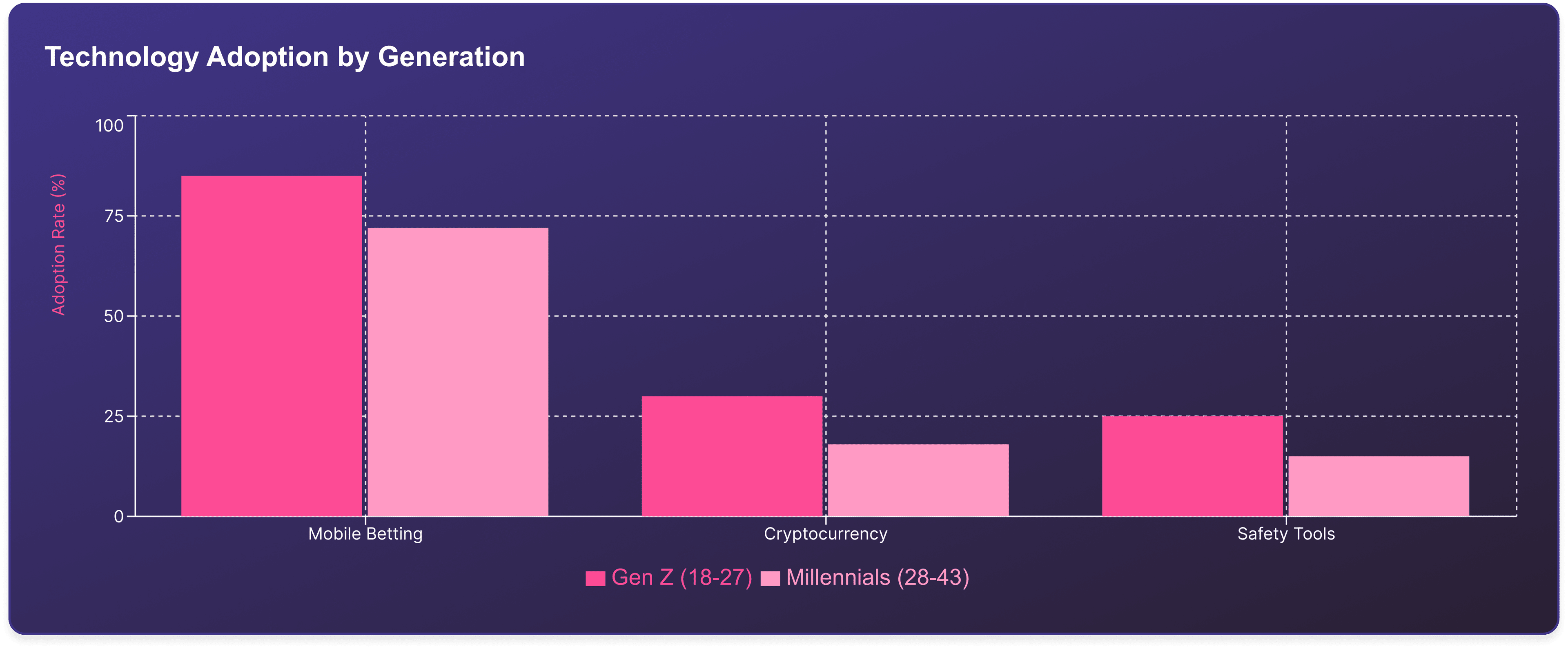
Social interaction is another key factor. Over half of Gen Z bettors say they usually bet while watching matches with friends or family. Betting becomes part of a shared experience, not a private activity. Gen Z also stands out in technology use. Around 30% use cryptocurrencies, and about 25% regularly use responsible gambling tools like spending limits and time-out features.
As more Gen Z players reach legal betting age, their influence will only grow. By 2025–2026, they are expected to become the largest single demographic in esports betting.
Millennials: The Economic Engine of Esports Betting
Millennials, aged 28–43, continue to be a core group in esports betting. They hold a stable market share of around 43–44%, even as Gen Z grows quickly. Compared to younger bettors, Millennials usually have higher incomes and more financial stability.
This shows in their betting behavior. Millennials tend to place larger bets but do so less often. While Gen Z focuses on live micro-bets, Millennials are more likely to research esports teams and matches in advance and look for value. Their average bet size is significantly higher, which makes them especially important for overall revenue.
Mobile betting is still dominant for Millennials, with about 70–75% using smartphones. However, many also switch to desktop platforms, especially when placing more complex bets. Their use of cryptocurrency is lower than Gen Z, at around 18%, and responsible gambling tool usage sits at about 15%.
Millennials bring a mix of gaming knowledge and betting experience. Having watched esports grow from small tournaments into global events, they act as a stabilizing force as the market expands.
Gen Z vs. Millennials: Contrasting Approaches to Esports Betting Markets
The differences between Gen Z and Millennials create a diverse betting environment. Gen Z usually places smaller bets, often under €15, and values fast, social experiences. Millennials place fewer bets, but their average wager is higher, around €35–40, and they focus more on potential returns.
Payment preferences highlight this divide. Gen Z adopts crypto and mobile wallets at nearly twice the rate of Millennials, who still rely more on traditional payment methods. Betting style also differs. About 67% of Gen Z prefers live and micro-betting, compared to 48% of Millennials.
User interface expectations vary as well. Gen Z wants clean, app-like platforms with social features, while Millennials prefer data-heavy layouts with detailed statistics. Betting operators now face the challenge of serving both groups at the same time.
Technology Adoption & Payment Preferences in Esports Betting
Technology plays a central role in esports betting. Today, 70–80% of all esports bets are placed on mobile devices. Platforms are being designed around mobile use first, not as an extra option.
Gen Z leads in adopting new payment methods for esports, especially cryptocurrencies and fintech solutions. This reflects their comfort with digital finance. At the same time, Gen Z is also the most active group when it comes to responsible gambling tools. About one quarter regularly use limits and self-control features, showing a stronger awareness of risks.
| Technology Aspect | Gen Z Adoption | Millennial Adoption | Industry Impact |
| Mobile Betting | 85%+ | 70–75% | Driving platform design toward mobile-first experiences |
| Cryptocurrency Usage | 30% | 18% | Accelerating integration of digital currencies |
| Responsible Gambling Tools | 25% | 15% | Encouraging platforms to improve safety features |
The growth of esports betting reflects a wider shift in how younger generations engage with gambling. Gen Z is pushing mobile-first design, social betting, and new payment methods, while Millennials provide steady revenue through larger wagers. Together, these groups are reshaping the industry. Operators that adapt to these preferences are well positioned to grow, while those focused only on traditional models may struggle to keep up. For more information on esports betting and player strategies, explore EsportRanker.