
There is a noticeable pattern in esports that every viewer eventually recognizes. A player dominates online, looks untouchable in scrims, and builds a reputation as one of the most promising talents in the scene. Then the stage arrives—whether it is VALORANT Champions, CS2 Majors, or League of Legends Worlds—and something changes. The same player who looked confident and decisive suddenly hesitates, misses timings, or disappears entirely from the match.
From the outside, it is often described simply as “choking.” But that explanation barely scratches the surface.
What is happening is not a lack of skill. It is a breakdown in how that skill is accessed under pressure. The difference between online performance and stage performance is not just environmental—it is psychological, structural, and, in many cases, predictable.
At the highest level of esports, confidence is not just an advantage. It is a requirement. And when it drops, everything else follows.
Key Takeaways
- Stage environments introduce psychological pressure that directly affects performance
- Confidence influences decision-making speed, communication, and execution
- Online success does not always translate to LAN performance
- External factors like crowd, expectations, and stakes amplify stress
- Teams are increasingly investing in mental performance alongside mechanics
The Gap Between Online and Stage Performance
In online environments, players operate within controlled conditions. They are familiar with their setup, free from distractions, and often communicating in a relaxed, predictable environment. This is where many players build their reputation.
On stage, those conditions disappear.
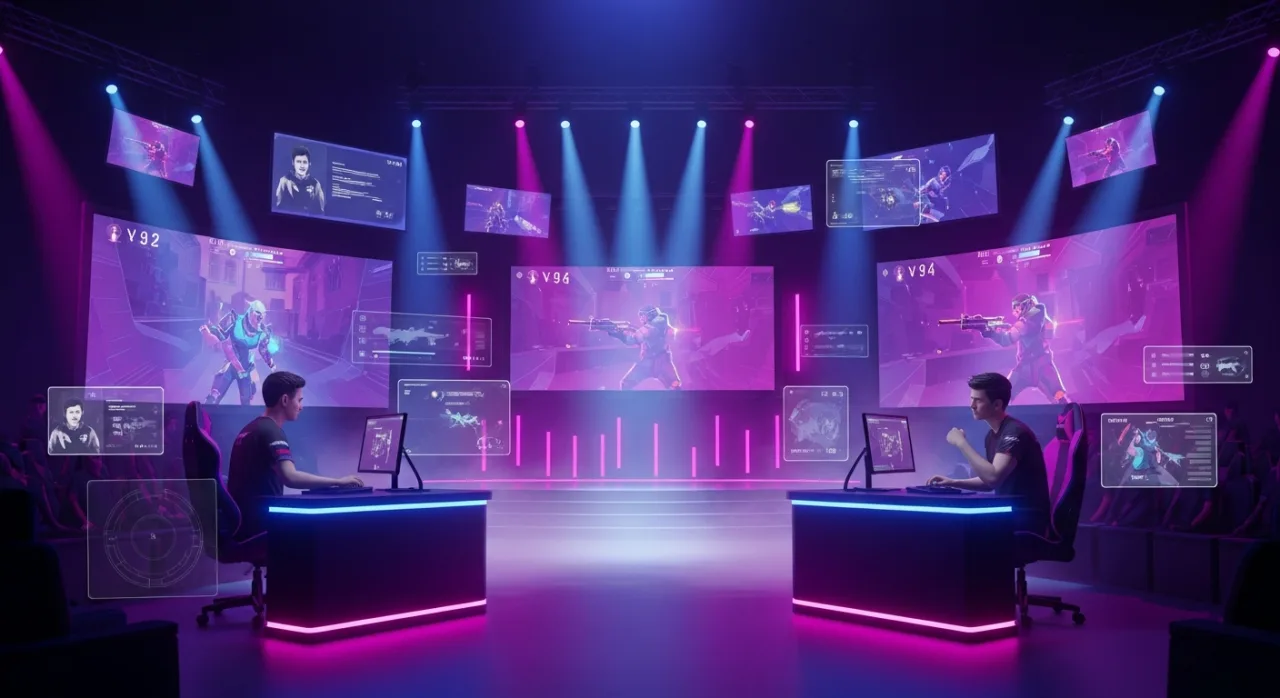
The environment shifts to a live setting with bright lights, production noise, audience presence, and the awareness of being watched by thousands—sometimes millions—of viewers. For players from teams like Fnatic, T1, or NAVI, this is part of the job. For newer or less experienced players, it can be overwhelming. The result is a performance gap.
Environment | Characteristics | Impact on Player |
|---|---|---|
Online | Controlled, familiar, low-pressure | High consistency |
Stage (LAN) | Public, high-stakes, unpredictable | Increased variability |
This gap is not about ability. It is about how that ability holds under pressure.
Confidence as a Performance Multiplier
Confidence in esports is not just about mindset—it directly affects gameplay. A confident player commits to decisions quickly, communicates clearly, and executes without hesitation. An uncertain player does the opposite. They second-guess, delay actions, and become reactive instead of proactive.
In games like CS2, hesitation can mean missing a timing window by milliseconds. In VALORANT, it can lead to poorly timed utility or lost map control. In League of Legends, it can result in missed engages or slow rotations. These are not mechanical failures. They are decision-making delays caused by reduced confidence.
“At the highest level, hesitation is often more damaging than a mistake.” — Competitive analysis, HLTV & coaching insights
Once that hesitation starts, it compounds.
The Weight of Expectations
Pressure in esports does not come from a single source. It builds from multiple directions.
Players are aware of their organization’s expectations, the audience watching, and the importance of the match. For teams competing in international events, the stakes are amplified by national pride, fan bases, and career implications. A player on Gen.G or LOUD is not just playing for themselves—they are representing a brand, a region, and, in many cases, a narrative that has been built around them.
That awareness changes behavior. Instead of focusing purely on the game, players begin to think about consequences. What happens if they lose a duel, miss a shot, or make the wrong call? That shift in focus is enough to disrupt performance.
Experience Isn’t Always the Solution
It is often assumed that experience automatically fixes stage issues. While experience helps, it is not a complete solution.
There are veteran players who continue to struggle in high-pressure environments, just as there are rookies who perform exceptionally well on stage. The difference lies in how individuals process pressure, not just how often they experience it. Some players adapt quickly, using the energy of the crowd to enhance performance. Others internalize the pressure, leading to increased anxiety and reduced clarity.
“Pressure doesn’t affect everyone equally—it reveals how players respond to uncertainty.” — Esports psychology research summary
Communication Breakdown Under Pressure
Confidence collapse does not only affect individual performance—it impacts the entire team. In structured teams like G2 Esports or DRX, communication is critical. Calls need to be clear, timely, and decisive. When one player hesitates, it can disrupt the entire system.
Under pressure, communication often becomes:
- Less frequent
- Less precise
- More reactive
This creates uncertainty within the team. Decisions take longer, coordination weakens, and mistakes become more likely. In this way, individual confidence issues scale into team-wide performance problems.
The Role of Preparation and Mental Training
Top teams are increasingly recognizing that mechanical skill alone is not enough. Mental preparation is becoming a core part of training.
Organizations are investing in:
- Performance psychologists
- Structured routines before matches
- Simulation of stage conditions during practice
- Stress management techniques
Teams like T1 and Fnatic have incorporated structured preparation processes that go beyond gameplay, focusing on how players enter matches mentally. This reflects a broader shift in esports. Performance is no longer just about skill—it is about stability.
Why Some Players Thrive Instead
While some players struggle, others elevate their performance on stage.
These players tend to:
- Simplify decision-making under pressure
- Trust their preparation
- Maintain consistent routines
- Use the environment as motivation rather than distraction
Instead of overthinking, they rely on instinct and structure. This allows them to maintain speed and clarity even in high-pressure moments. The difference is not in what they can do, but in how they access it.
Industry Context
Factor | Impact |
|---|---|
Audience size (major events) | Increased pressure and visibility |
Prize pools | Higher stakes, greater consequences |
Career volatility | Fear of underperformance |
Patch/meta changes | Added uncertainty |
As esports continues to grow, these pressures are only increasing.
Conclusion
The idea that players “fall apart” on stage simplifies a much more complex issue. What looks like a sudden drop in performance is often the result of pressure interacting with confidence, decision-making, and team dynamics. At the highest level, skill is not enough on its own. It must be supported by the ability to perform under conditions that are far from ideal.
Because in esports, the biggest difference between players is not what they can do when everything is controlled. It is what they can still do when it isn’t.
Sources: HLTV Performance Analysis, Esports Insider – Player Performance & Psychology, Journal of Sports Psychology – Pressure & Decision-Making, Riot Games Competitive Insights
Top 3 esports betting sites
- 1,500 USD
- 1,600 USD
- 1,000 USD
18+ · T&Cs Apply · Play Responsibly