Breaking Point: The Hidden Toll of Life at the Top of Esports

Recommended casinos
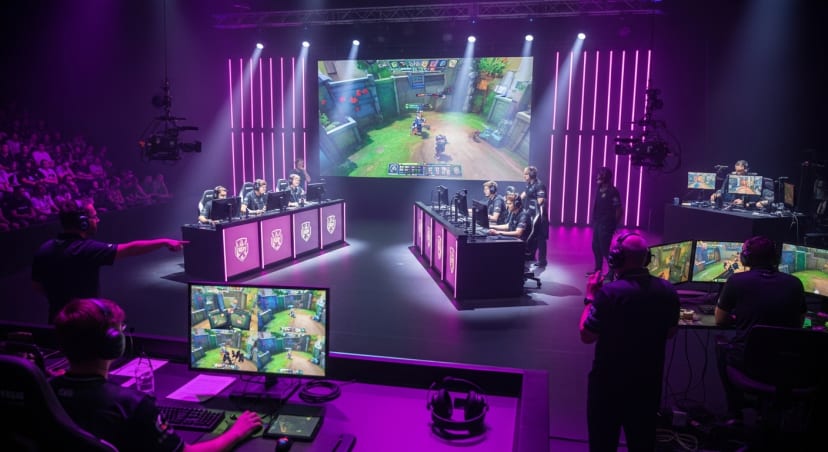
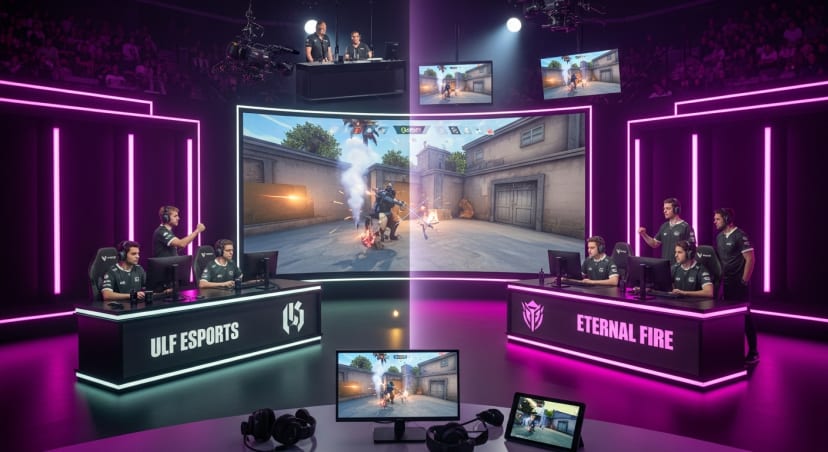
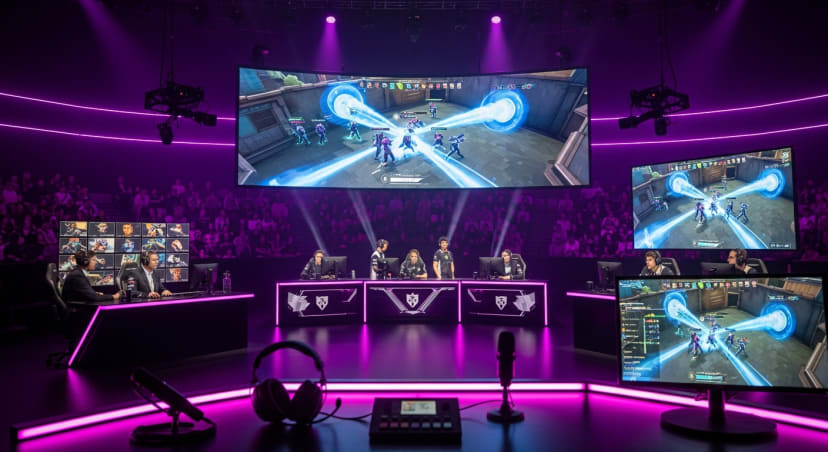
From the outside, professional esports looks like a success story that happened almost overnight. Packed arenas, millions of viewers tuning in across Twitch and YouTube, and organizations like T1, Fnatic, Team Liquid, and NAVI operating with the scale and visibility of traditional sports teams. Players competing in titles such as League of Legends, Counter-Strike 2, Dota 2, and VALORANT are often seen as the new generation of elite competitors, earning sponsorships and building global fanbases.
But that surface-level narrative leaves out a critical part of the picture.
Behind the visibility and growth sits a system that places relentless demands on the people at its center. The expectation to perform consistently, adapt quickly, and remain relevant in an environment that never really pauses creates a level of pressure that is difficult to sustain over time.
Burnout, in this context, is not an exception. It is increasingly becoming part of the reality of competing at the highest level.
Key Takeaways
- Burnout is no longer a rare occurrence in esports; it is becoming a structural issue tied to how the industry operates
- Players are expected to maintain extremely high practice volumes while also competing and traveling throughout the year
- The short lifespan of esports careers creates urgency that pushes players to overextend themselves
- Public scrutiny and constant online feedback intensify pressure in ways that traditional sports do not fully replicate
- Support systems are improving, but they are not yet consistent across all teams, regions, or tiers
The Daily Reality of a Pro Player
At the highest level, esports is not about playing casually—it is about maintaining a competitive edge in an environment where even small declines in performance can have immediate consequences.
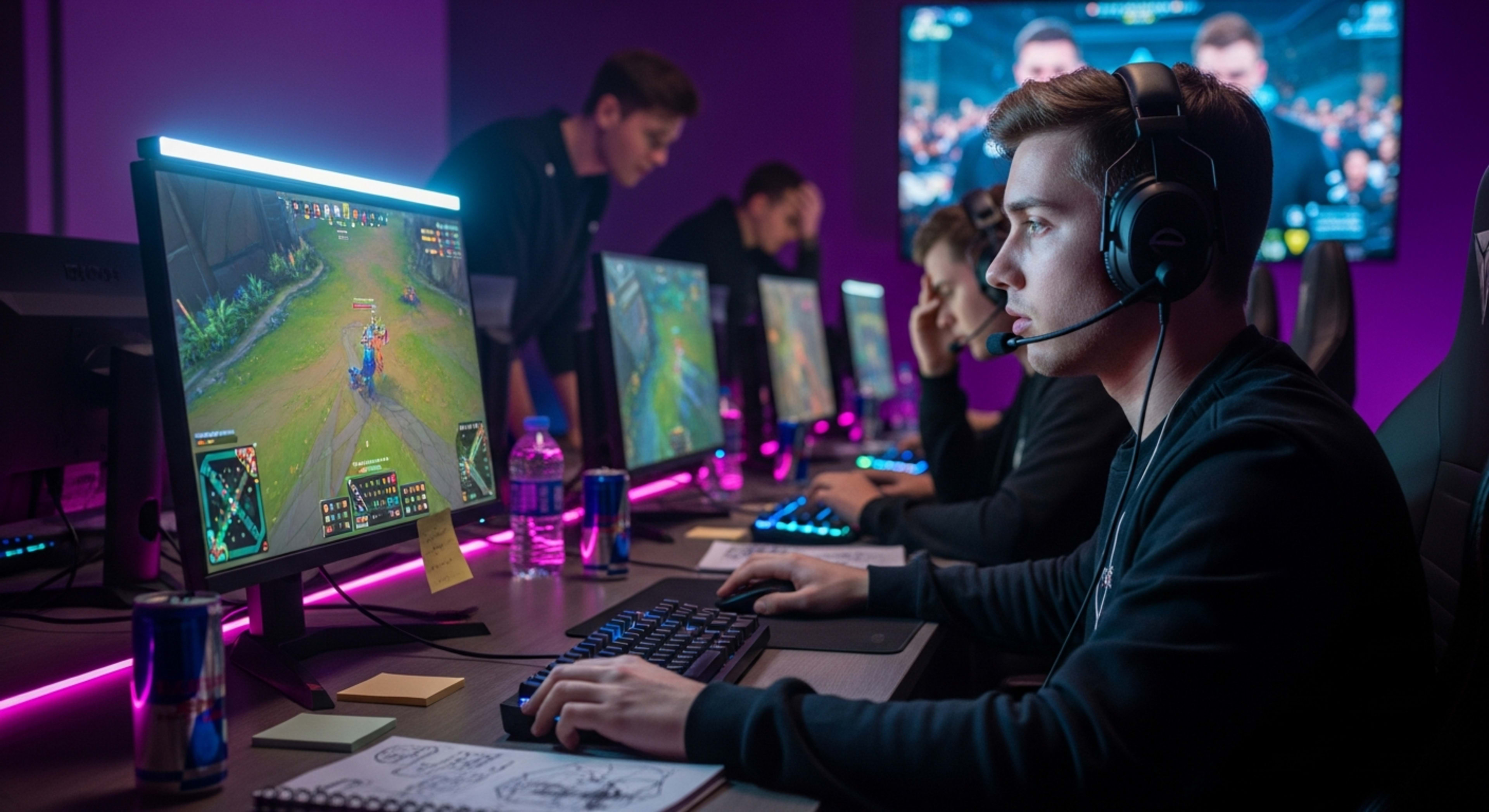
A typical day for a professional player is structured around improvement. Scrimmages against other teams are used to test strategies. Ranked games are played to maintain mechanical sharpness. VOD reviews are conducted to analyze mistakes in detail. Team discussions follow, often focusing on refining communication and coordination.
In titles like League of Legends or Dota 2, where strategy evolves constantly, this process repeats every day with only minor variation. It is not unusual for players to spend ten or more hours in front of a screen, fully engaged in high-focus activities that demand precision and consistency.
What makes this particularly challenging is that the work is mentally intensive rather than physically demanding. There is no natural point where the body forces a stop. Players can continue pushing, often beyond what is sustainable, because the feedback loop is immediate—more practice feels like more progress.
Over time, however, that equation starts to break down.
A Competitive Calendar Without Real Downtime
Unlike traditional sports, where off-seasons are clearly defined and protected, esports operates on a much more continuous cycle.
Major events such as League of Legends Worlds, The International, or VALORANT Champions are surrounded by qualifiers, regional leagues, and international tournaments. For top teams, the calendar rarely leaves room for extended breaks. Even in quieter periods, players are expected to keep training to stay ahead of the competition.
Travel adds another layer of complexity. International events require teams to move frequently across regions, adjust to different time zones, and perform under unfamiliar conditions. Recovery time between these events is often limited.
The result is a system in which players are almost always preparing for the next match, tournament, or patch. There is very little opportunity to fully reset.
The Pressure to Stay Relevant
Esports careers are notoriously short, and that reality shapes how players approach their time in the scene.
In many cases, peak performance occurs early. Younger players continually enter the ecosystem, bringing new skills and adaptability. At the same time, roster changes are frequent, and teams are quick to replace underperforming players.
This creates an environment where maintaining a position is just as difficult as earning it.
Players are aware that their window of opportunity is limited. That awareness often leads to overcommitment—longer practice hours, fewer breaks, and a reluctance to step back even when signs of fatigue appear. Taking time off can feel like falling behind, and in a highly competitive environment, falling behind can mean being replaced.
The pressure is not just to perform well, but to remain indispensable.
Constant Visibility and Public Scrutiny
Another factor that distinguishes esports from many traditional sports is the level of direct visibility players have to their audience.
Matches are streamed live, often with chat reactions happening in real time. Clips are shared instantly across social platforms. Discussions unfold on Reddit, X, and YouTube within minutes of a game ending.
For players on high-profile teams like G2 Esports or FaZe Clan, every decision is analyzed. Mistakes are replayed, criticized, and sometimes amplified beyond their actual impact on the game.
This creates a feedback loop in which players are constantly aware of how they are perceived.
Unlike traditional athletes, who are often shielded from immediate public reaction, esports players are embedded in the public eye. They read comments, see criticism, and feel the weight of expectations daily.
Over time, that level of exposure can become exhausting.
The Impact of Constant Game Evolution
Esports titles are not static. Games like VALORANT, League of Legends, and CS2 are updated regularly, sometimes in ways that significantly alter how they are played.
New patches can change character viability, weapon balance, or entire strategic approaches. What worked last month may no longer be effective. Players are required to continuously relearn aspects of the game, often while preparing for upcoming matches.
This constant evolution keeps the game fresh for audiences, but it adds another layer of pressure for competitors.
It is not enough to be good. Players have to keep adapting, often at a pace that leaves little room for consolidation or rest.
Where the Industry Is Improving
The conversation around burnout is no longer being ignored.
Organizations like Team Liquid and Cloud9 have started investing in performance staff, including psychologists and wellness coaches. Some teams are experimenting with structured schedules that include mandatory rest periods. There is also growing awareness from publishers and tournament organizers about the need to balance competition with sustainability.
These are important steps.
However, they are not yet standard across the industry. Many players, particularly outside top-tier teams or in less-developed regions, still lack access to these resources. The gap between well-supported players and those without support remains significant.
Why This Matters Beyond the Players
Burnout is often framed as an individual issue, but its impact extends beyond the players themselves.
When top competitors step away early or struggle to maintain performance, it affects the overall quality of competition. Teams lose stability. Storylines become harder to sustain. Fans lose connection with players who disappear too quickly.
At a broader level, it also affects how viable esports careers appear to newcomers. If the path to the top is seen as unsustainable, it may discourage long-term participation.
For an industry that relies heavily on talent, this is not a minor concern.
What Needs to Change
Addressing burnout is not about asking players to simply manage their stress better. It requires structural changes to how the ecosystem operates.
More balanced schedules would allow players to recover between events. Clear off-seasons would create defined periods of rest. Better contract stability would reduce the constant fear of replacement. Expanded access to mental health support would provide players with tools to manage pressure more effectively.
Equally important is a cultural shift.
Rest needs to be seen as part of performance, not a sign of weakness. Sustainability needs to be prioritized alongside results.
These changes will not happen overnight, but they are necessary if esports wants to maintain both its talent and its growth.
Conclusion
Esports at the highest level is intense, demanding, and constantly evolving. That intensity is part of what makes it compelling, but it also creates conditions that are difficult to sustain over time.
Burnout is not just a side effect of competition—it is a signal that the system itself needs adjustment.
The industry has started to recognize this, but recognition alone is not enough. Long-term success will depend on whether esports can create an environment where players can perform at their best without sacrificing their longevity.
Because in the end, the strength of the competition depends on the people competing.
Sources: Esports Insider, Dot Esports, Riot Games Esports, HLTV, Journal of Esports Research, British Journal of Sports Medicine