
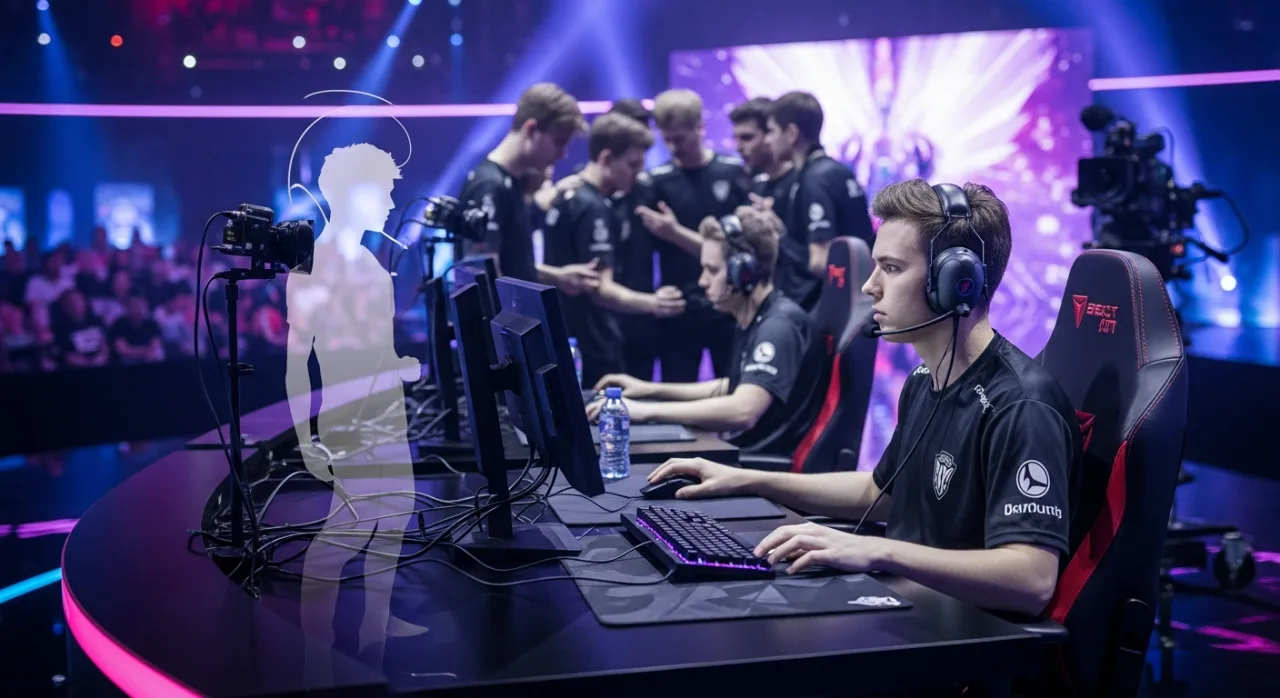
Getting benched in esports rarely looks the way people expect it to. There is no long decline, no clear warning signs, and often no public explanation. A player can go from starting lineup to inactive overnight, sometimes right after a decent performance, sometimes even after a win. For fans watching VALORANT Champions Tour, LCS, or CS2 Majors, it often feels abrupt. For players inside the system, it is simply how things work.
The uncomfortable reality is that job security in esports is not built around stability. It is built around flexibility. Teams are designed to change quickly, adapt to new conditions, and optimize constantly. That means players are not just competing against opponents—they are competing against potential replacements, internal expectations, and shifting priorities that are not always visible from the outside.
This is what makes benching so difficult to predict. It is rarely about one mistake, one match, or even one tournament. It is about alignment, and alignment can change faster than performance.
Key Takeaways
- Benching in esports often happens without clear external warning signs
- Decisions are driven by fit, direction, and internal dynamics—not just results
- Short evaluation windows increase volatility in player careers
- Contracts do not guarantee playtime, only association with the team
- Players are continuously evaluated, even when performing well
Benching Is a Structural Feature, Not an Exception
In traditional sports, being benched is usually tied to form. In esports, it is tied to structure. Teams are built to iterate quickly, especially in games like VALORANT and CS2, where meta changes, patch updates, and tactical trends evolve constantly. Organizations like G2 Esports, NAVI, or DRX are not just building lineups—they are maintaining systems that need to stay competitive across multiple tournaments.
That system-first approach changes how players are evaluated. A player is not only judged on performance, but on how well they fit into the current version of the team. If the team shifts direction—whether tactically, stylistically, or strategically—the player’s role can become less relevant, even if their individual level remains high.
This is why benching often feels disconnected from results. The decision is not about what the player did. It is about what the team needs next.
The Invisible Evaluation Process
One of the biggest challenges in understanding benching is that most of the evaluation happens internally. Fans see matches, stats, and highlights. Teams see communication patterns, scrim behavior, adaptability, and how players respond under pressure in practice environments.
These are not visible metrics, but they carry significant weight. A player might perform well on stage but struggle in scrims, resist strategic changes, or create friction in communication. Over time, those issues become more important than match-day performance. By the time a roster change is announced, the decision has usually been forming for weeks.
“Roster moves are rarely reactive—they’re the result of accumulated internal data.” — Competitive operations insight, team management perspective
This gap between public perception and internal evaluation is why benching often appears sudden.
Contracts Without Control
Being signed to an organization gives the impression of stability, but in esports, contracts often prioritize team flexibility over player security. It is common for players to remain under contract while being benched, meaning they are still tied to the organization but no longer competing. This creates a unique problem.
Players are not free agents, but they are also not active competitors. Moving to another team requires negotiations, buyouts, or waiting for contract terms to change. In fast-moving ecosystems like EMEA Challengers or North American VALORANT, this delay can cost players critical opportunities.
In practical terms, a contract secures your place in the organization—but not your place in the lineup.
Fit Over Form
One of the most misunderstood aspects of benching is the role of “fit.” In team-based esports, coordination matters as much as individual skill. A lineup needs to function as a unit, with clear communication, defined roles, and consistent decision-making. When that breaks down, teams look for adjustments.
A player who is individually strong but disrupts pacing, communication flow, or strategic execution can be replaced by someone who is less individually dominant but better aligned with the team’s structure. This is particularly visible in disciplined systems like League of Legends LCK teams or structured CS2 lineups.
The result is a shift in priorities. Teams are not always selecting the best individual players. They are selecting the best combination of players.
The Short Window to Prove Value
Esports careers operate on compressed timelines. Players often have limited opportunities to prove themselves before decisions are made. A few tournaments, a split, or even a single stage performance can shape how a player is viewed internally.
This creates a constant evaluation cycle. Even when players are performing well, they are still being assessed. Can they adapt to new roles? Can they handle pressure? Do they fit future plans? These questions do not stop once a player secures a starting position. In many cases, the evaluation continues quietly until a decision is made.
The Risk of Being Replaceable
At its core, benching reflects one fundamental reality: players are replaceable. The talent pool in esports is deep, and new players are constantly emerging through ranked ladders, academy teams, and regional circuits.
This creates downward pressure on job security. If a team believes another player can fit better, adapt faster, or align more closely with their goals, the switch can happen quickly. Unlike traditional sports, where development systems create longer timelines, esports ecosystems allow for rapid movement between tiers.
This makes stability harder to maintain.
What This Means for Players
For players, the takeaway is not that performance does not matter, but that it is not enough on its own. Staying in a lineup requires more than just playing well. It requires maintaining alignment with the team, adapting to changes, and consistently meeting expectations that extend beyond the server.
This includes:
- Adapting to new strategies and metas
- Maintaining strong communication within the team
- Staying consistent in both scrims and official matches
- Understanding the team’s long-term direction
Because in esports, your position is not secured by what you have done—it is defined by whether you still fit.
Conclusion
Being benched without warning is not an anomaly in esports. It is a consequence of how the system is designed. Teams prioritize flexibility, adaptability, and long-term optimization, and players operate within that structure.
From the outside, it can look sudden or unfair. From the inside, it is often the result of a process that has been unfolding quietly over time. The reality is simple, even if it is difficult to accept.
In esports, you are not guaranteed a place because you performed well yesterday. You keep your place only as long as you fit today.
Sources: Esports Insider (team operations), HLTV roster trends, Riot Games competitive ecosystem insights, Liquipedia roster and contract data
Top 3 esports betting sites
- 1,600 USD
- 1,500 USD
- 500 USD
18+ · T&Cs Apply · Play Responsibly