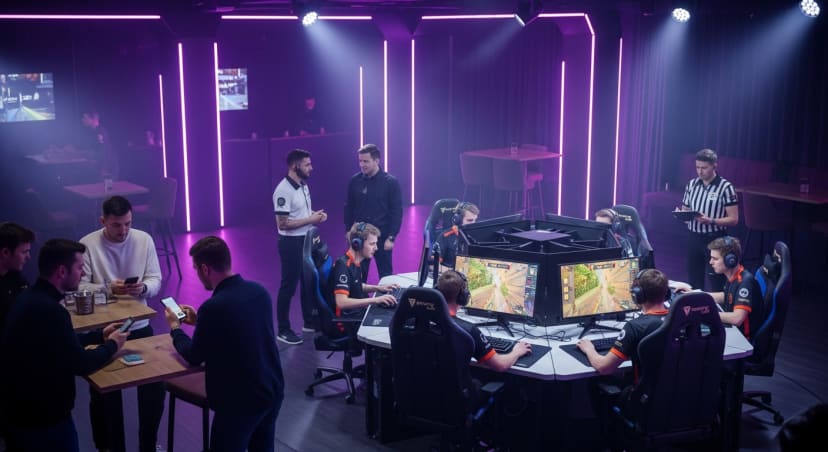
CoD Esports Stalled by Yearly Game Changes


Recommended casinos
Former Call of Duty Multiplayer Creative Director Greg Reisdorf has pinpointed the franchise’s annual release cycle as the primary obstacle to building a stable esports scene capable of competing with VALORANT and Counter-Strike 2.
Reisdorf’s comments highlight why the Call of Duty League struggles to generate sustained fan investment and betting liquidity in regulated global markets. With Stage 1 Major 2026 peaking at just 353,000 viewers and concurrent player counts hovering around 35,000, the lack of consistency disrupts skill progression, rivalries, and long-term audience loyalty, which are essential for esports betting depth.
Key Takeaways
- Annual full-game releases uproot mastered mechanics and metas, preventing the stable platform needed for deep betting markets.
- Operators in the EU, UK, Brazil, and Asia see fragmented CoD liquidity versus reliable volume on enduring titles like CS2 and LoL.
- Cosmetics and community models could offer revenue alternatives, but Activision’s casual focus limits esports evolution.
Reisdorf revealed that discussions about a dedicated, consistent PvP version — similar to Counter-Strike — repeatedly surfaced during development. “It always came up in development: why are we doing this over and over again?” he told Hellcase. Players and pros invest thousands of hours only for core rules and mechanics to reset yearly, eroding the narrative depth and team loyalty that fuel betting engagement in other shooters.
This structural issue contrasts sharply with stable ecosystems, where rosters, strategies, and rivalries build over seasons, supporting consistent pre-match, player props, and live-betting volumes. VALORANT strategist Roxanne “Lux” emphasized that fans invest in stories and personalities, not performance alone. Without product continuity, the CDL struggles to create marketable narratives that convert viewers into dedicated bettors.
Reisdorf suggested exploring skin and cosmetic marketplaces for sustainable revenue without full annual overhauls. However, Activision’s commercial model prioritizes yearly premium releases for casual console audiences, sidelining esports longevity.
For licensed esports betting operators outside the US, these dynamics translate to higher volatility and shallower market depth on CoD events compared to mature verticals. While select majors still attract odds, the constant resets limit year-round liquidity and the availability of advanced product features.
Fans propose more LAN tournaments and expanded formats, yet the core tension remains between publisher monetization and esports requirements for stability. Reisdorf’s analysis underscores the strategic choices needed to unlock greater betting potential in global markets.
Sources: Hellcase Interview, Esports Insider